The Ultimate Guide to Shipping Label Printer in the UK
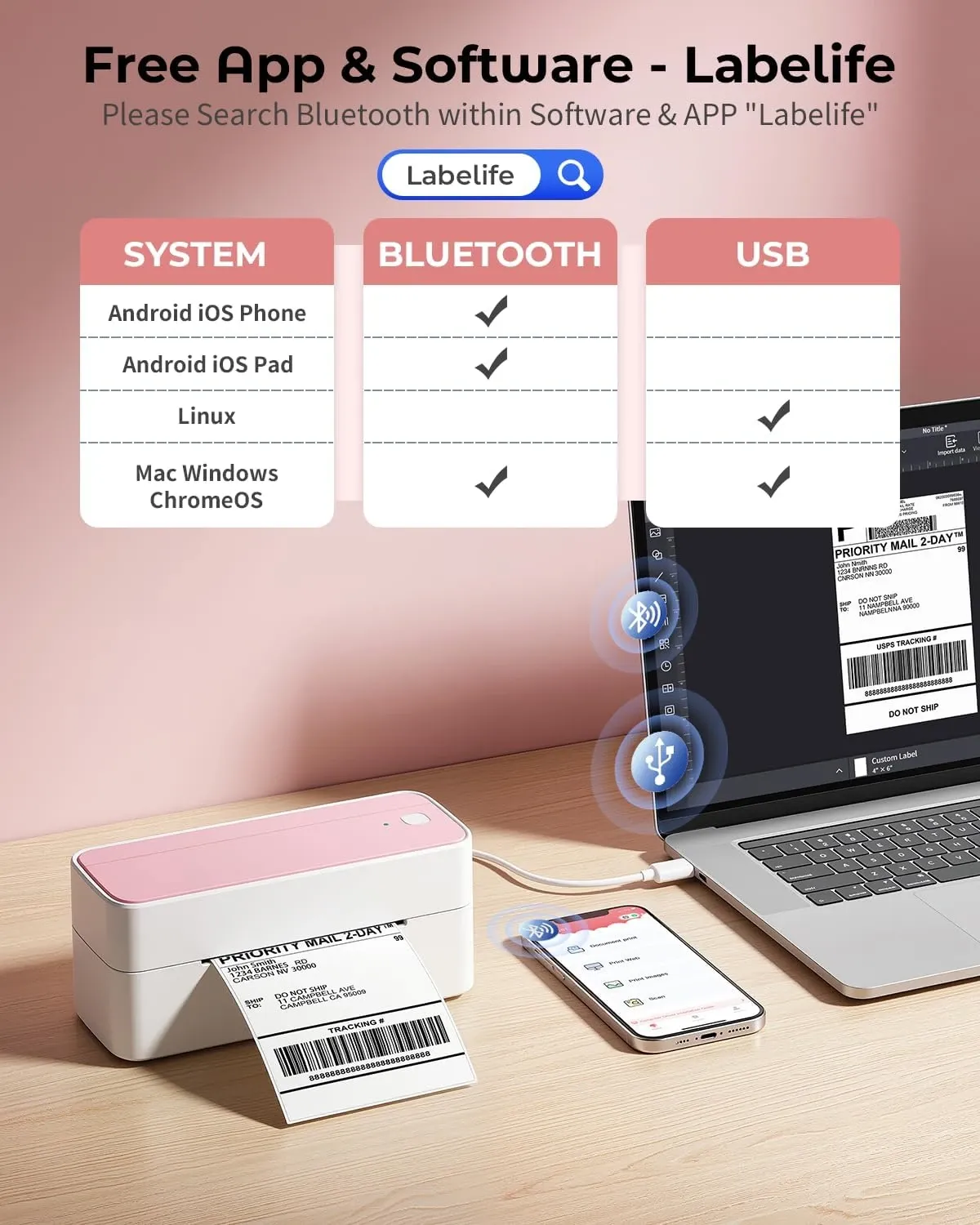
TL;DR: A shipping label printer is a purpose-built device designed to quickly print scannable courier and postage barcodes without using ink. Based on our testing at ThermalLab, switching to a direct thermal shipping label printer is the most effective way for UK ecommerce sellers to speed up dispatch, reduce running costs, and ensure compliance with Royal Mail and other major courier guidelines.
If you are wondering exactly what a shipping label printer is, it is essentially a dedicated machine that uses heat instead of ink to print parcel labels instantly. For UK online sellers, dispatch speed is often the difference between a smooth operation and a daily bottleneck. Furthermore, if you are currently printing labels on an inkjet printer, cutting paper by hand, or wrestling with sheet labels that refuse to align, a dedicated shipping label printer can remove friction from every order you send. Consequently, it is one of the simplest upgrades a small business can make, yet it has a direct impact on fulfilment time, accuracy and presentation.
At ThermalLab, the focus is clear: providing a reliable thermal label printer for faster UK dispatch. Based on our extensive testing with British businesses sending parcels through Royal Mail, marketplace platforms, and courier networks, we have found that a compact Bluetooth shipping printer can seamlessly turn a kitchen table packing station or warehouse bench into a far more efficient dispatch setup.
Therefore, this guide explains what a shipping label printer is, how it works, what UK sellers should look for, and how to choose the right model for your order volume and workflow. Whether you run an Etsy shop, a growing Shopify brand, an eBay store, or a multi-channel operation fulfilling hundreds of parcels a week, this article is designed to help you buy with confidence.
Key Takeaways
- A shipping label printer is purpose-built to print courier and postage labels quickly, clearly and consistently.
- Direct thermal printers are the most practical option for many UK ecommerce businesses because they use heat instead of ink or toner.
- A compact Bluetooth shipping printer is particularly useful for small business fulfilment, home offices and flexible packing stations.
- UK sellers should prioritise compatibility with Royal Mail, marketplaces, courier label sizes and common ecommerce platforms.
- Thermal printers can significantly reduce running costs because there are no ink cartridges to replace, although you will still need quality labels.
- Print clarity matters: according to UK courier guidelines, a sharp barcode helps couriers scan parcels first time and reduces avoidable dispatch issues.
- Choosing the right shipping label printer depends on label size support, connection options, software ease, reliability and daily order volume.
What is a shipping label printer?
A shipping label printer is a specialised device designed specifically for parcel labels, address labels and courier barcodes used in dispatch. Unlike a standard office printer, it is built around one primary job: producing readable, scannable labels quickly and with minimal setup.
In practical terms, that means it must handle common shipping label formats, print barcodes clearly, and fit neatly into a fulfilment workflow. For UK ecommerce businesses, this usually includes labels created through Royal Mail Click & Drop, courier portals, marketplace shipping tools and online store integrations.
Moreover, most modern shipping label printers used by small businesses are direct thermal. They print by applying heat to thermal label stock, meaning there is no need for ink cartridges or toner. As a result, that simplicity is a major reason they are widely used in ecommerce fulfilment.
What is the difference between a shipping label printer and a regular printer?
- Purpose-built output: It prints labels directly from a roll rather than general office documents on A4 paper.
- No ink required: Direct thermal models use heat-sensitive labels, eliminating ink costs entirely.
- Faster routine printing: Specifically designed for repetitive, high-speed label jobs.
- Better workflow: Labels feed in the right format instantly, meaning no more trimming A4 sheets by hand.
- Smaller footprint: Many models are incredibly compact, making them ideal for home offices and packing stations.
Why it matters for UK dispatch
According to UK courier guidelines, sorting networks depend heavily on scannable barcodes and clear recipient information. A blurred, misaligned or poorly cut label can slow down handover, cause delivery exceptions, or create a poor first impression for the customer. Ultimately, for British businesses dealing with increasing customer expectations around dispatch and delivery, the right printer supports both efficiency and professionalism.
Are shipping label printers worth it for small businesses?
Yes, absolutely. Order fulfilment has become increasingly demanding. Customers now expect quick dispatch, accurate tracking, and reliable delivery updates, whether they are buying from a national retailer or a one-person business in Manchester, Bristol or Glasgow. Consequently, that makes your dispatch infrastructure more important than ever.
According to the Office for National Statistics, ecommerce continues to account for a significant share of UK retail activity, with internet sales remaining an established part of consumer buying habits in Britain. As online order volumes grow, even small inefficiencies in packing and labelling become expensive in time and labour. Source: Office for National Statistics, Retail sales, Great Britain.
In our experience at ThermalLab, a dedicated shipping label printer addresses a very specific pain point: getting every parcel labelled properly, quickly and consistently. Therefore, if you dispatch daily, the time saved per parcel adds up incredibly fast, making the investment well worth it.
Common frustrations with traditional label printing
- Using an inkjet printer that runs out of ink at the worst possible moment.
- Printing onto A4 sheets and having to cut labels manually.
- Wasting expensive sheet labels due to poor alignment.
- Experiencing smudged text or unclear barcodes that fail courier scans.
- Enduring slow setup times when switching between different courier platforms.
- Needing a separate, large desk just for a bulky office printer.
What a dedicated printer improves
With a dedicated thermal shipping printer, the entire process becomes far more repeatable. You simply print, peel and apply. While that sounds simple, simplicity is exactly what efficient dispatch requires. For a small business, reducing decision points and technical problems in the packing process can successfully free up valuable time for customer service, stock management and overall growth.
How does a thermal shipping label printer work?
The vast majority of shipping label printers used in UK ecommerce are direct thermal printers. They work by using a thermal print head that applies targeted heat to specially coated labels. As the paper passes through, the heated areas turn dark, instantly creating text, barcodes and tracking information.
Furthermore, this method is especially attractive for shipping labels because courier labels are usually used immediately and do not need to last for years in direct sunlight. For normal parcel dispatch, direct thermal printing is fast, clean, and highly cost-effective.
Do shipping label printers need ink?
No, they do not. When looking at thermal technology, there are two main printing methods to understand:
- Direct thermal: No ink, toner, or ribbon required. It uses heat-sensitive paper, making it the ideal choice for shipping and postage labels.
- Thermal transfer: Uses a heated ribbon to transfer ink onto the label. This is better for asset labels that need long-term durability in harsher outdoor environments.
Based on our testing, for most UK ecommerce businesses sending parcels through Royal Mail and mainstream couriers, direct thermal is undoubtedly the sensible choice. It keeps running costs and maintenance significantly lower, all while delivering the crisp print quality needed for barcodes and address labels to scan perfectly every time.
Ready to try ThermalLab?
Shop Now — £71.63